
文章內容

Principle of Laser

❐ Definition of laser
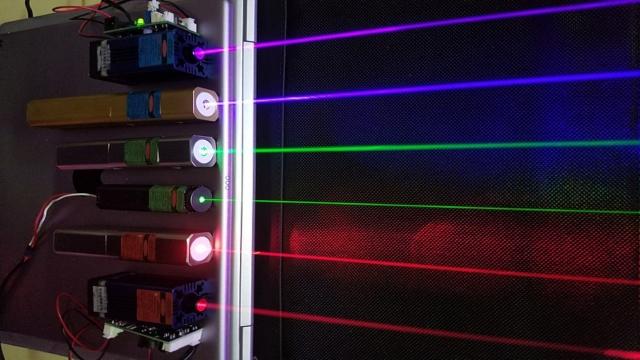
“Laser” is an abbreviation of Light Amplification by Stimulated Emission of Radiation, meaning using stimulated emission to amplify the strength of light. “Stimulated emission” is actually a completion of two important steps: first the pumping and second the resonance. Finally, the light would generate the “coherence” and the “constructive interference.” The meanings of these terminologies are introduced as follows:
❐ Pumping
➤Solid-state laser (mostly using photoluminescence): Solid-state laser belongs to a type of atomic light. The principle of atomic light as described previously is to exert the energy (light energy or electric energy) to stimulate the electrons doped with atoms to jump from the inner energy level to the outer energy level. When the electrons jumped back from the outer energy level to the inner energy level, the energy will be released in the form of light energy, as shown in Fig. 1(a).
➤ Semiconductor laser (mostly using electroluminescence): Semiconductor-based laser belongs to a type of semiconductor light. The principle of semiconductor light as described previously is to exert the energy (light energy or electric energy) to simulate the electrons in semiconductor to jump from the valence band to the conduction band. When the electrons jumped back from the conduction band to the valence band, the energy will be released in the form of light energy, as shown in Fig. 1(b).
The pumping has two types: photoluminescence (PL) and electroluminescence (EL). Either method may generate laser. PL is to exert light energy to enable electrons jumping; and, EL is to exert electric energy to enable electrons jumping, which would be described in details later.
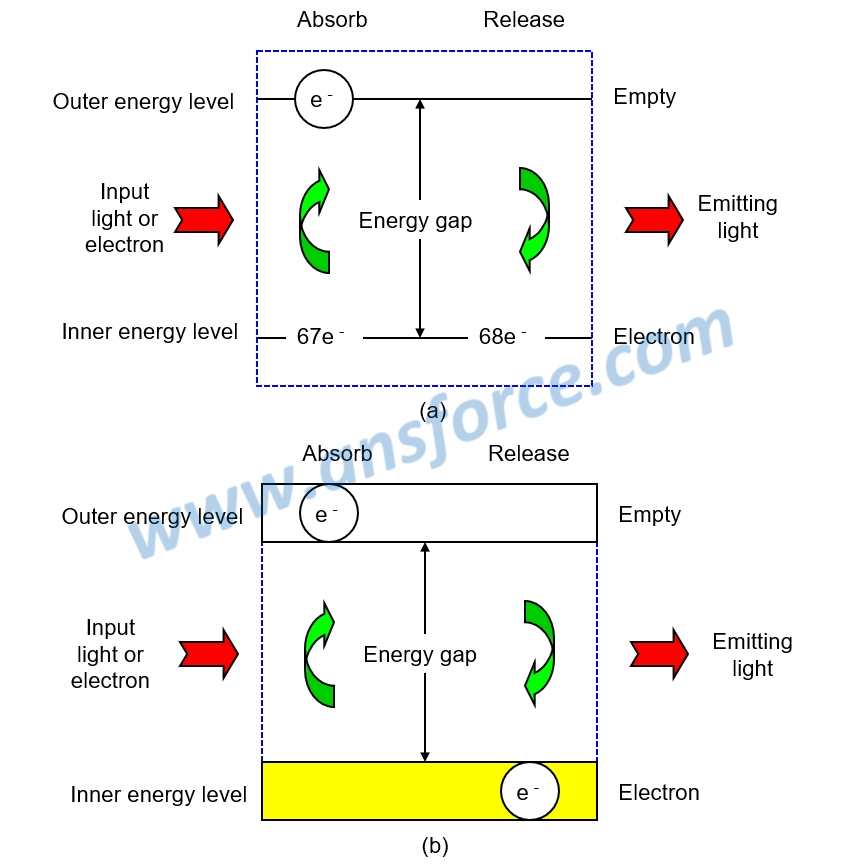
Figure 1: Principle of Laser Pumping.
❐ Resonance
A pair of resonance cavities is added outside the light emitting zone. The resonance cavity may be actually composed of a pair of mirrors that the light beam may be reflected back and forth between the left and right mirrors and may continuously absorb the light energy while passing the light emitting zone and finally generate the resonance to amplify the energy of the light beam.
➤ Photoluminescence (PL): Making Ti Sapphire laser as an example, the sapphire is first doped with titanium atoms to obtain the Ti Sapphire crystal. A lot of light sources in high brightness are placed around the crystal (emitting the light of a certain wavelength) to irradiate the crystal. When the crystal absorbed the light energy, it will generate “pumping” and emitting the light of another wavelength (color). The emitted light may generate resonance by reflecting back and forth through the left and right reflectors. Because the right reflector is designed to be able to pass through 1% of light, the high energy laser beam may pass through the right, as shown in Fig. 2(a).
➤ Electroluminescence (EL): Making GaAs laser as an example, the upper and lower sides of GaAs laser diode die (about the size of a grain of sand) are first respectively deposited with a layer of metal electrode, and the die is applied with voltage. When the die absorbed electric energy and generated pumping, it will emit the light of a certain wavelength (color). The emitted light may generate resonance by reflecting back and forth through the left and right reflectors. Because the right reflector is designed to be able to pass through 1% of light, the high energy laser beam may pass through the right, as shown in Fig. 2(b).
.jpg)
Figure 2: Principle of Laser Resonance.
❐ Coherence
Coherence is also called “correlation” and is used to describe the related characteristics of light wave regarding time and space during transmission. In short, coherence indicates if the light wave is aligned during transmission. We may imagine a row of marching troops as a light beam and each soldier become one photon. Then, the coherence refers to whether the actions of soldiers in a row of marching troops are aligned or not. If the actions of soldiers (light wave) are aligned and consistent, the row of troops may be called to have good coherence, i.e. capable of generating energy (laser beam) enough to frighten enemies; otherwise, the actions of soldiers (light wave) are disordered, the row of troops is called to have bad coherence, i.e. incapable of generating energy (light of LED) enough to frighten enemies.
➤ Temporal coherence: The results for measuring the wavelength of a light wave are all the same at the same position but at different time, meaning the light wave has good coherence within this period of time. Laser beam usually has excellent temporal coherence. Michaelson interferometer is used for measuring temporal coherence in engineering.
➤ Spatial coherence: The results for measuring the wavelength of a light wave are all the same at the different positions but at the same time, meaning the light wave has good spatial coherence within this period of time and may keep the coherence no matter how far the light wave is transmitted. Laser beam usually has excellent spatial coherence. Double-slit interferometer is used for measuring spatial coherence in engineering.
❐ Interference
Interference refers to a phenomenon for forming a new waveform by overlapping two or more than two rows of light waves in the space. The overlapping of light wave basically will amplify or diminish the light wave. Interference may be categorized into two types:
➤ Constructive interference: If more than two rows of light waves have high coherence and they are overlapped in the space and amplified due to interference, it is called “constructive interference” and the brightness will be increased at this time, as shown in Fig. 3(a).
➤ Destructive interference: If more than two rows of light waves have low coherence and they are overlapped in the space and diminished due to interference, it is called “destructive interference” and the brightness will be decreased at this time, as shown in Fig. 3(b).
Laser has to add a pair of resonance cavities outside the light emitting zone. The resonance cavity may be actually composed of a pair of mirrors that the light beam may be reflected back and forth between the left and right mirrors and may continuously absorb the light energy while passing the light emitting zone and finally generate the constructive interference resulting in resonance, such that the light energy may be amplified and the light field may be concentrated at the same time to form a laser beam.
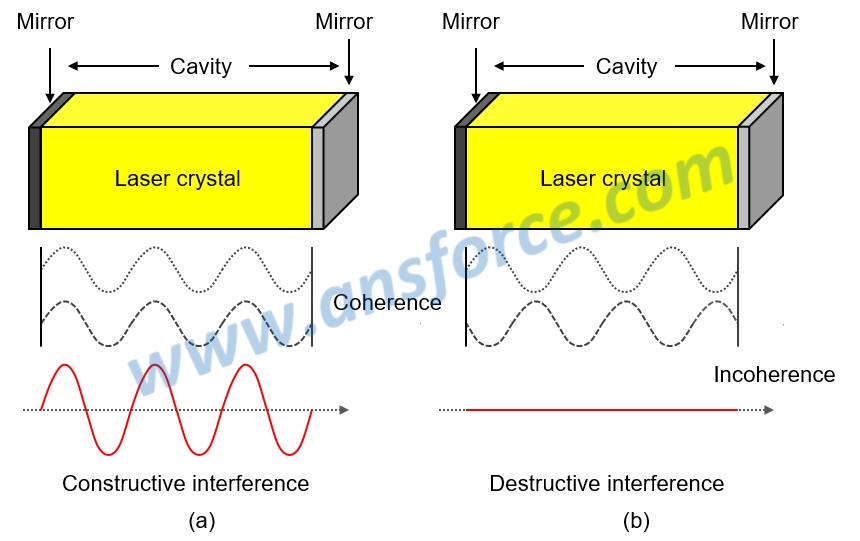
Figure 3: Principle of Laser Interference.
【Remark】The aforementioned contents have been appropriately simplified to be suitable for reading by the public, which might be slightly differentiated from the current industry situation. If you are the expert in this field and would like to give your opinions, please contact the writer. If you have any industrial and technical issues, please join the community for further discussion.